
One Stick at a Time.

Scott Spiezio and the long, quiet work of making a comeback.
Last fall, I was at the University of Illinois–Ohio State football game when Scott Spiezio was honored at halftime as a member of the University of Illinois Athletics Hall of Fame Class of 2025. Scott and I had known each other in high school. We played against each other in basketball, and he played baseball with some of my closest friends. When I saw him on the field, I took a picture and sent him a quick message congratulating him and suggesting we catch up sometime.
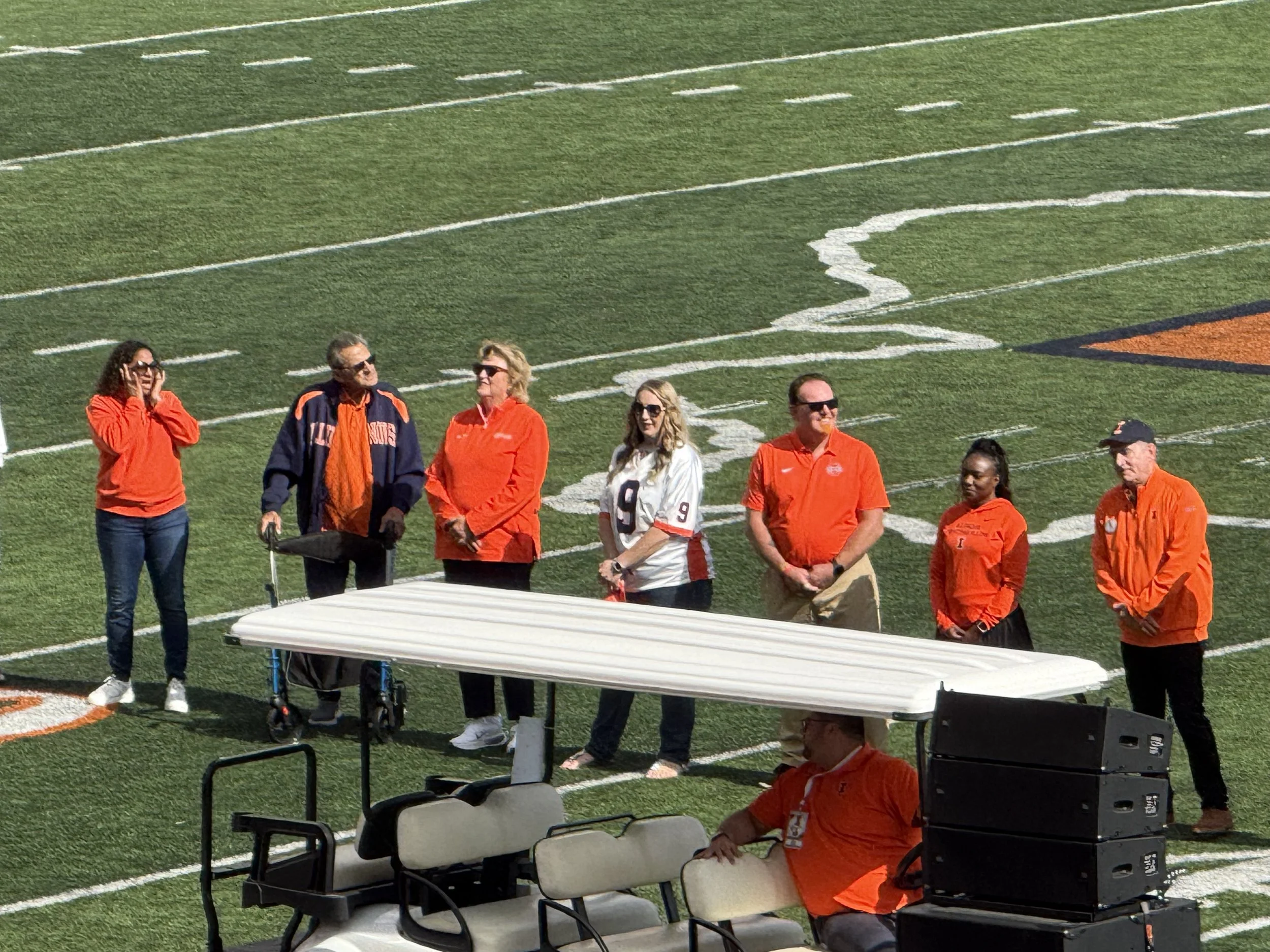
Look at that orange goatee :) I-L-L… - he makes it work :)
He did not respond.
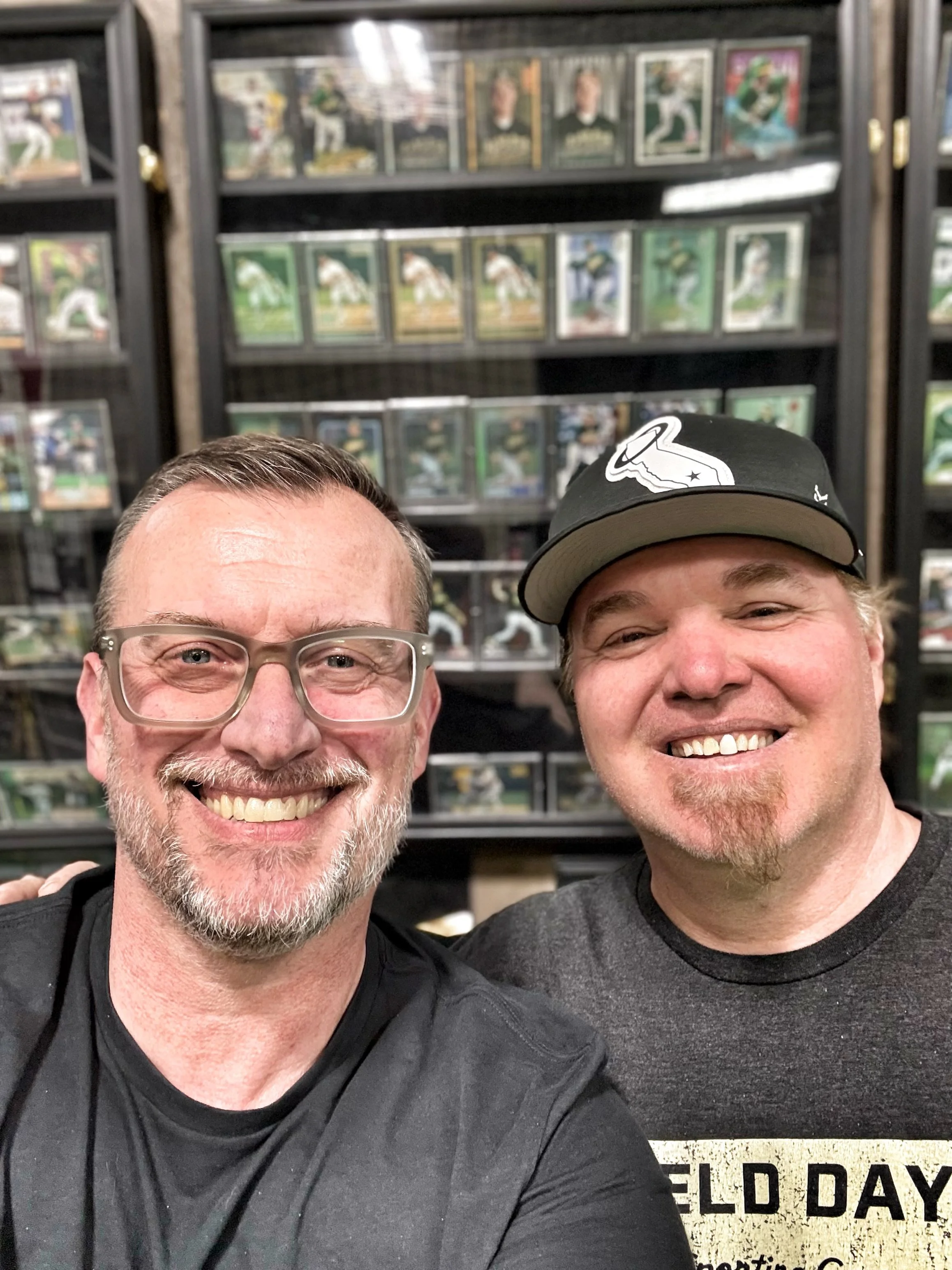
A few months later, I realized it had been more than 30 years and there was a decent chance he did not remember me. I wrote again, this time mentioning a few of the friends and players we knew in common. That second message started a conversation, and eventually Scott invited me to his home, where we sat surrounded by photographs, championship memorabilia, and reminders of an extraordinary baseball career.
Yet the most meaningful things Scott shared had very little to do with statistics, trophies, or World Series rings. He wanted to talk about what happened after the cheering stopped.
Baseball fans remember Scott for one of the most important home runs in World Series history. In Game 6 of the 2002 World Series, the Anaheim Angels were losing 5–0 to the San Francisco Giants. They were down three games to two and only eight outs away from elimination. The Giants were already preparing their clubhouse celebration. The plastic was up, the champagne was on ice, and the trophy was being unveiled.
Then Scott stepped to the plate.
After an eight-pitch battle with Félix Rodríguez, Scott connected on a three-run home run that brought the Angels back to life. As he ran toward first base, everything seemed to slow down. He could hear himself breathing as he watched the ball carry toward the wall, and he prayed for it to go out.
It did.
The Angels completed the comeback, won Game 7, and captured the first World Series championship in franchise history. Scott finished the postseason with 19 RBIs, tying the Major League Baseball record at the time.
It was the culmination of a dream he had been preparing for since he was three years old.
Scott’s father, Ed Spiezio, played nine seasons in the major leagues and won two World Series championships with the St. Louis Cardinals. Ed understood what it took to get to the major leagues and, more importantly, what it took to stay there. He taught Scott to switch-hit, play multiple positions, control his breathing, visualize success, and prepare for moments that had not happened yet.
At the end of their childhood practices, Ed would give Scott a familiar scenario: three balls, two strikes, two outs, bases loaded, bottom of the ninth, Game 7 of the World Series.
Scott’s mother would be in the backyard shagging balls and reminding him to “do it for the ring.” Years later, as Scott rounded the bases in Game 6, he was reliving all of it. The work, the visualization, the backyard, his father, his mother, and the ring he had imagined for most of his life had suddenly become real.
It looked like the perfect ending. It wasn’t.
What Happens After the Dream Comes True?
After the World Series, Scott’s life changed almost overnight. David Letterman called. Jay Leno called. Monday Night Football called. Television programs wanted him. His band performed with well-known musicians. People who had never noticed him before suddenly wanted his time, attention, and presence.
At first, it was exciting. Then it began disrupting nearly everything that had kept him grounded. His training changed. His time with family changed. His spiritual practices changed. The routines that had organized his life were replaced by appearances, attention, temptation, and praise.
Scott had reached the destination he had pursued for most of his life, but no one had prepared him for the emptiness that could follow. He had played more than 10 years in the major leagues and won a World Series, fulfilling the goals he had prayed about since childhood.
Now he faced a question that can be surprisingly difficult to answer: What do you live for after the dream comes true?
We spend a lot of time teaching people how to endure failure. We spend much less time teaching them how to survive success.
Success can change how other people see us, and if we are not careful, it can also change how we see ourselves. It does not heal every wound or answer every question. It cannot protect us from loneliness, depression, pain, addiction, or ourselves.
Sometimes success simply gives us better places to hide.
The Injury That Changed Everything
While playing for the Seattle Mariners, Scott suffered a serious back injury. Doctors warned him that continuing to play could result in paralysis.
He was in intense pain, struggled to hold his children, and feared losing the career that had defined him. He was also separated from the teammates and support system that had surrounded him with the Angels.
Depression arrived, followed by alcohol. Scott had never been a heavy drinker. He had spoken to young people about staying away from drugs and alcohol. He was the person no one would have expected to become addicted, but addiction is not especially interested in the identity we built before it arrived.
Alcohol temporarily softened Scott’s depression and anxiety. A few drinks became more. His decisions became increasingly destructive. His marriage ended, his relationship with his parents fractured, and drugs eventually entered his life.
By 2007, Scott was dependent on alcohol and cocaine simply to function. From the outside, he was still a Major League Baseball player.
Inside, he was disappearing.
Addiction Never Belongs to One Person
I am sure some people reading this have experienced addiction from one side or the other. Perhaps you have struggled with it yourself, or perhaps you have loved someone who has.
Sarah and I have lost someone in our family to addiction, so as Scott shared his story, moments from that painful season kept returning to me. His experience was uniquely his, but the fear, confusion, hope, heartbreak, and helplessness surrounding it felt deeply familiar.
That is one of the difficult truths about addiction: one person may be using the substance, but an entire family lives with its effects. It is difficult to hear Scott describe those years without thinking about what they must have been like for his parents. They had spent their lives helping their son pursue an almost impossible dream. They threw batting practice in the backyard, traveled to his games, and watched him win championships.
Then they had to watch him become someone they could no longer recognize. Imagine the phone calls, the sleepless nights, and the promises they desperately wanted to believe. Imagine constantly trying to determine whether the next act of help would move him toward recovery or simply make it easier for him to continue destroying himself.
Imagine being a sibling who loves someone but no longer knows how to reach them. Imagine being a spouse trying to protect a family while living inside the chaos. Imagine being a child wondering why love is not enough to make a parent stop. Imagine being a friend trying to decide when to answer the phone, when to say no, and whether today’s crisis will be the one that finally ends differently.
Addiction rarely harms only one person. It enters a family, friendship, workplace, or community and begins rearranging everyone’s life. Scott’s parents eventually reached a point when they could no longer support the choices that were destroying him. They stepped back and told him they would be there when he was ready to stop.
It would have been easy for Scott to interpret that boundary as rejection, but it was love refusing to participate in his destruction. Later, when Scott entered treatment, his parents attended classes at the rehabilitation center. They took pages of notes and tried to understand both what their son was facing and what loving him well would now require of them.
They could not recover for him, force him to become ready, or protect him from every consequence. They could only love him, learn, establish boundaries, and remain close enough to recognize the moment he reached for help. There may be no more helpless role than loving someone whose pain is making their decisions for them.
Eleven Attempts at Hope
Scott went through 11 rehabilitation programs in approximately 10 years. That number could be presented as evidence that treatment failed repeatedly. It could also be evidence that Scott kept trying. He would become sober, relapse, enter treatment, and try again. We prefer redemption stories with one clear turning point, where someone hits bottom, asks for help, and walks confidently into a transformed life.
Real recovery is rarely that tidy. It may require another treatment program, another apology, another boundary, and another morning when the only available victory is making it until evening.
Relapse is serious. It can cause enormous harm. But it does not mean a person is beyond hope. Sometimes the most courageous thing someone can do is return to the place they have already left 10 times and try once more.
A 20 Percent Chance
In April 2018, Scott’s skin and eyes turned yellow. His organs were shutting down, and doctors gave him approximately a 20 percent chance of surviving the next several days. Even if he lived, they believed he would probably need a liver transplant.
Scott reached the point where he needed to tell his parents and sisters what should happen if he died. He had asked God for help before, but when the immediate danger passed, he would take control again and eventually steer himself back toward the same cliff.
This time, he surrendered. He asked God to help him survive the next five days and take away his cravings. Scott survived, and April 6, 2018, became his first day of sobriety. Months later, his doctor studied his scans and bloodwork and discovered that his numbers had returned to normal. He would not need a transplant.
Scott recently celebrated eight years of sobriety. He understands his recovery through his faith. It gave him a way to accept responsibility for what he had done without believing those choices were the final definition of who he was.
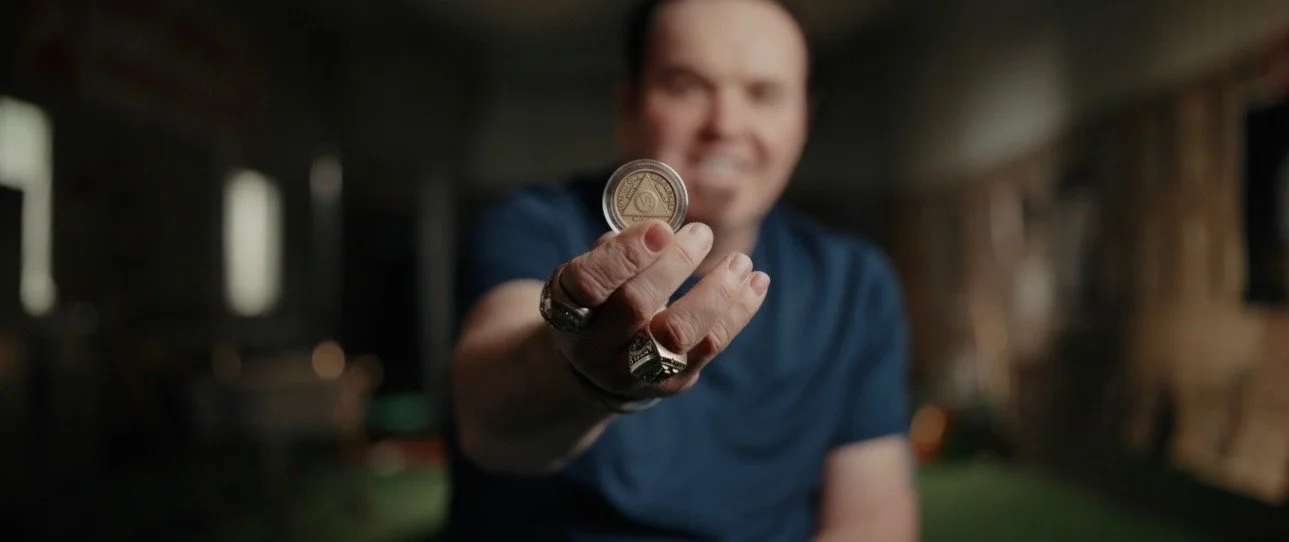
8 Years!!! Keep going Spiez.
Survival, however, was only the beginning. He still had relationships to repair, trust to rebuild, and a life to recover.
One Stick at a Time
Of everything Scott shared, one small detail may say the most about what recovery actually looks like. When he first returned home, he was carrying tremendous guilt and shame. His relationships needed repair, his yard had fallen into disarray, and he was not ready to step fully back into public life.
So he went outside and picked up sticks. That was all he could do that day.
The next day, he picked up more sticks. Soon, he had made a burn pile. Eventually, he could mow the yard. Then he started attending his children’s games. He returned to church, reconnected with his parents and friends, and began speaking more openly about what had happened.
One small act made the next one possible.
Today, Scott coaches and mentors young baseball and softball players. What began with one student grew to two, then four, then eight. Over the past several years, he has worked with hundreds of young athletes. He also shares his story in churches, schools, treatment settings, and community gatherings.
His story is now told in his memoir, The Hardest Comeback, and the feature-length documentary Spiezio, arriving in select theaters on September 10.
Scott is not sharing his story to relive the applause or polish his reputation. He is sharing it because someone listening may be where he once was. Someone else may be sitting beside that person, exhausted, frightened, and unsure how to help.
The Stories Happening Around Us
The stadium lights make Scott’s story more visible, but they do not make it unique.
Stories like his are unfolding around us every day. They happen to teachers, executives, construction workers, healthcare professionals, pastors, artists, students, neighbors, parents, and children. They happen in families without championship rings, multimillion-dollar contracts, or newspaper headlines.
The struggle may involve alcohol, cocaine, opioids, prescription medication, gambling, or another form of pain or compulsion that has slowly taken control.
Many of these stories remain hidden because shame convinces people they are the only ones living them. They are not.
Scott’s story matters because it helps remove some of that shame. It reminds the person struggling that another attempt is still possible. It reminds families that loving someone does not require pretending everything is fine. It reminds friends that boundaries and compassion can exist at the same time.
Most importantly, it reminds us that a person at their worst is still a person, not a cautionary tale or a problem to be solved. Scott’s home run will always be part of baseball history. It changed the momentum of a World Series, brought a stadium to its feet, and helped deliver a championship.
But it was not his hardest comeback. The hardest comeback happened in hospital rooms, rehabilitation centers, churches, difficult conversations, and a neglected backyard. There was no crowd, no scoreboard, and no dramatic music. There was simply a person deciding, and then deciding again, to keep moving toward life.
It happened when Scott admitted he could not save himself. It happened when his parents learned that loving him did not mean rescuing him from every consequence. It happened when his family allowed trust to be rebuilt slowly. It happened when Scott chose to believe his worst decisions did not have to become his permanent identity.
It happened one stick at a time.
What We’re Walking Away With
Scott’s story reminds us that addiction is rarely an individual experience. One person may be using the substance, but an entire circle of parents, spouses, siblings, children, and friends lives with its effects. When we talk about recovery, we must also make room for the people who love someone through it and need healing of their own.
It reminds us that outward success cannot tell us what is happening inside another person. A World Series ring cannot prevent depression. Money cannot purchase emotional health. Talent cannot overpower addiction. Someone can appear to have everything while privately losing themselves.
It reminds us that asking for help is not weakness. Strength is not the ability to carry everything alone. Sometimes strength is telling the truth before pain removes every other choice.
It reminds us that boundaries can be an expression of love. Saying no does not always mean giving up. Sometimes a boundary protects the family while leaving responsibility for recovery with the person who must ultimately choose it.
It reminds us that recovery does not always follow a straight line. Eleven trips to rehab can look like 10 failures and one success, or they can look like someone refusing to let the latest setback become the final chapter.
Most of all, Scott’s story reminds us that rebuilding rarely begins with the entire answer. It begins with the next visible thing.
What We Can Do Now
If someone in your life has changed, withdrawn, become unreliable, or seems to be carrying something alone, reach out. Ask a direct but compassionate question, and then listen without immediately trying to fix, lecture, or diagnose.
If you are the person struggling, tell someone the truth today. You do not need to have your entire recovery plan figured out before asking for help. The first call does not need to solve everything. It only needs to become the next visible step.
If you love someone struggling with addiction, seek support for yourself too. You are allowed to need help, rest, counseling, and boundaries. Loving someone does not require covering up consequences, providing money that may support the addiction, or allowing unsafe behavior into your home. You can care deeply about someone while acknowledging that you cannot make the decision to recover for them.
If opioids may be involved, learn the signs of an overdose and how to use naloxone, a medication that can reverse an opioid overdose. SAMHSA provides overdose-prevention and naloxone information. In a suspected overdose, call 911 immediately.
Finally, do not underestimate small beginnings. Make the call. Attend the meeting. Keep the appointment. Tell the truth. Take the walk. Pick up the stick. Then return tomorrow and take the next step.
Where to Reach Out
These U.S. resources are available to people struggling with substance use and to the people who love them:
SAMHSA National Helpline: Call 1-800-662-HELP (4357) for free, confidential, 24/7 treatment referrals and information about mental health and substance use. You can also search for care at FindTreatment.gov.
988 Suicide & Crisis Lifeline: Call or text 988 for free, confidential, 24/7 support during a mental health, substance-use, or emotional crisis. You can also use the 988 online chat.
Al-Anon Family Groups: Call 1-888-4AL-ANON (1-888-425-2666) for meeting information and support resources for families and friends affected by another person’s drinking. You can also find an Al-Anon meeting online.
Immediate danger or suspected overdose: Call 911 immediately. If opioids may be involved and naloxone is available, administer it while waiting for emergency help.
Save these numbers. Share them with someone who may need them. Put them somewhere you can find them during a moment when thinking clearly may be difficult. Some comebacks change the score of a game. Others slowly return a person to their family, their faith, their community, and themselves. Those are the comebacks we may never see on television.
They are also the ones most worth cheering for.
Keep running and thanks for reading,
Justin